Tosti: The Early Work and Career of Artist
Mark Tosti
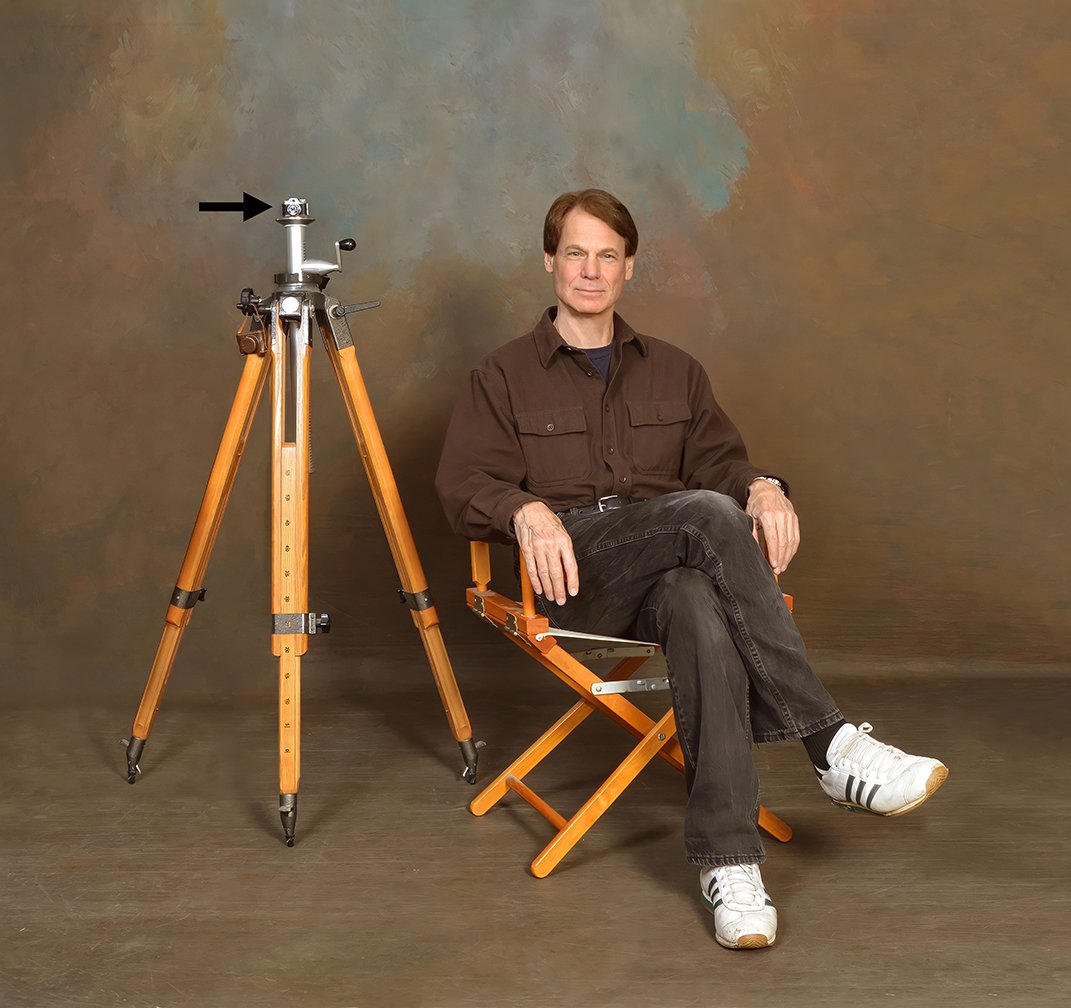
Mark Tosti is a lifelong artist-photographer and former arts lawyer.
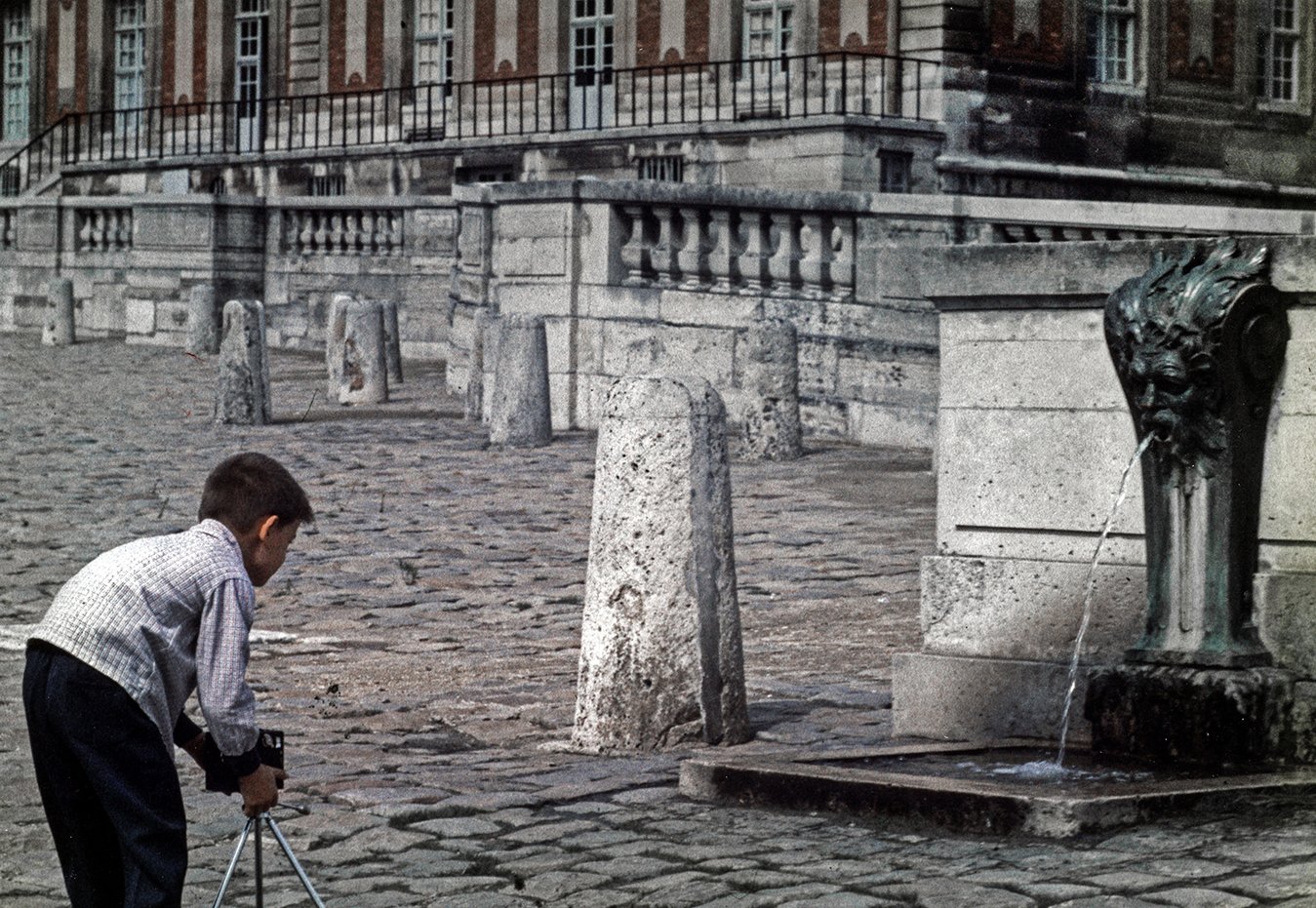
Mark at Fountainebleau
Tosti, age 6, on a photoshoot at Fountainebleau, France, circa 1957. Photo by Marian E. Tosti
When Tosti was a young boy, he photographed, with his mother, the city of Paris, where his family was residing before moving to the Washington, DC suburb of Falls Church, Virginia. Throughout his early school years, Tosti studied at Hill’s Art School in Arlington, under noted children’s art teacher, John Bryans. Bryans introduced Tosti to a variety of media including pen and ink, block printing, oil painting, watercolor and life drawing.
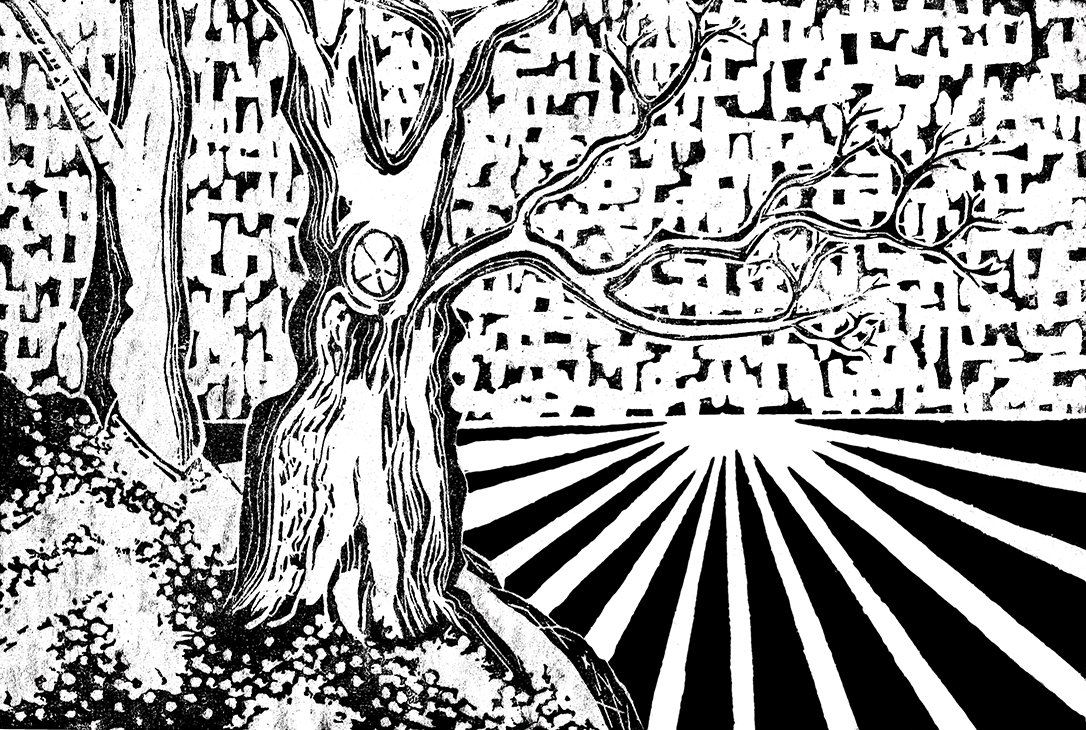
The Field Beyond
Block Print, Arlington, Virginia, circa 1965 (age 14)
Tosti’s interests in art grew, so that by the time he enrolled at Princeton University in the fall of 1969, he was actively considering an art career. At Princeton, Tosti studied under noted Spanish Artist, Esteban Vicente.
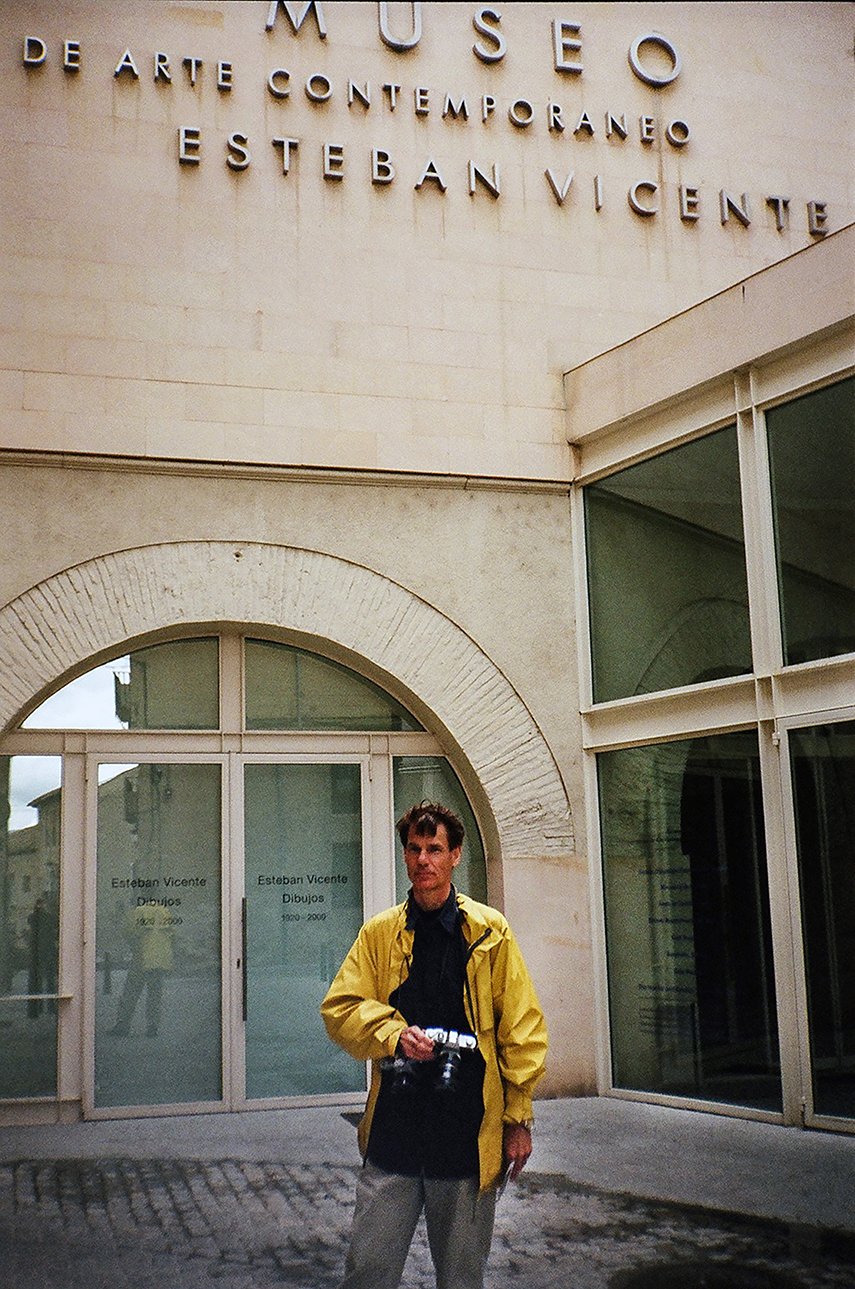
Mark at the Vicente Museum
Tosti on a pilgrimmage to the Museo De Arte Contemporaneo Esteban Vicente, Segovia, Spain, 2010
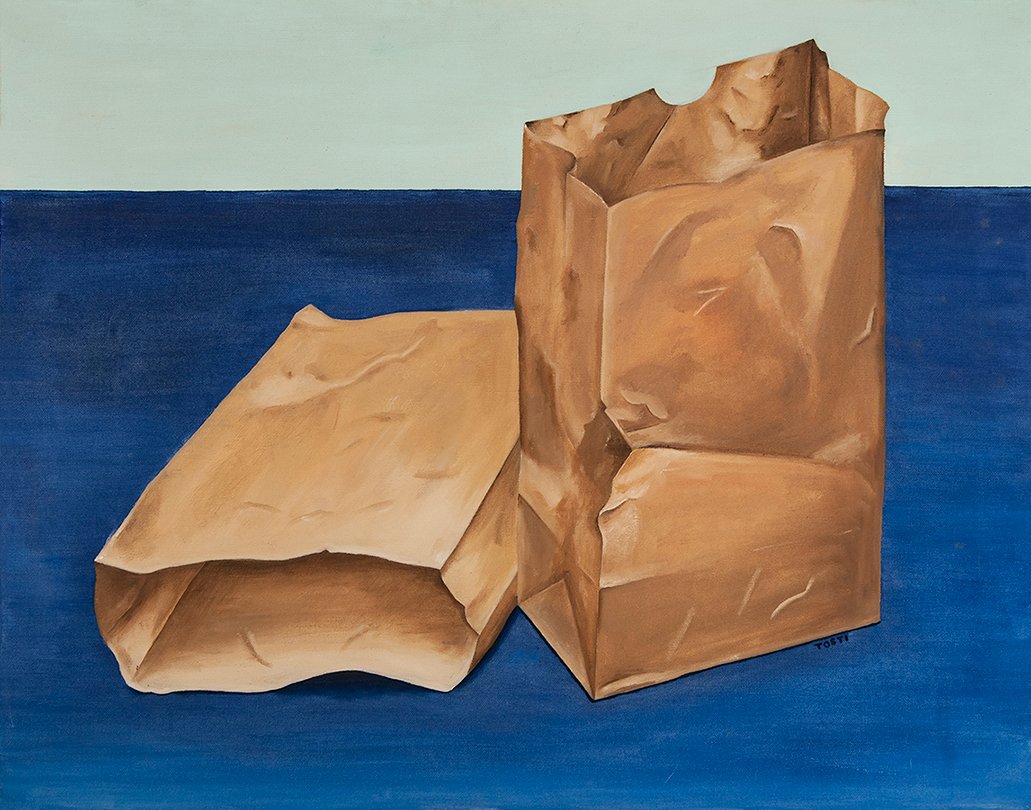
Two Bags
Oil on canvas, Princeton, New Jersey, 1970 (age 19)
In 1971, Tosti participated in Manhattanville College’s summer arts program on the island of Mallorca, Spain, where he studied with noted professor and printmaker, John Ross.
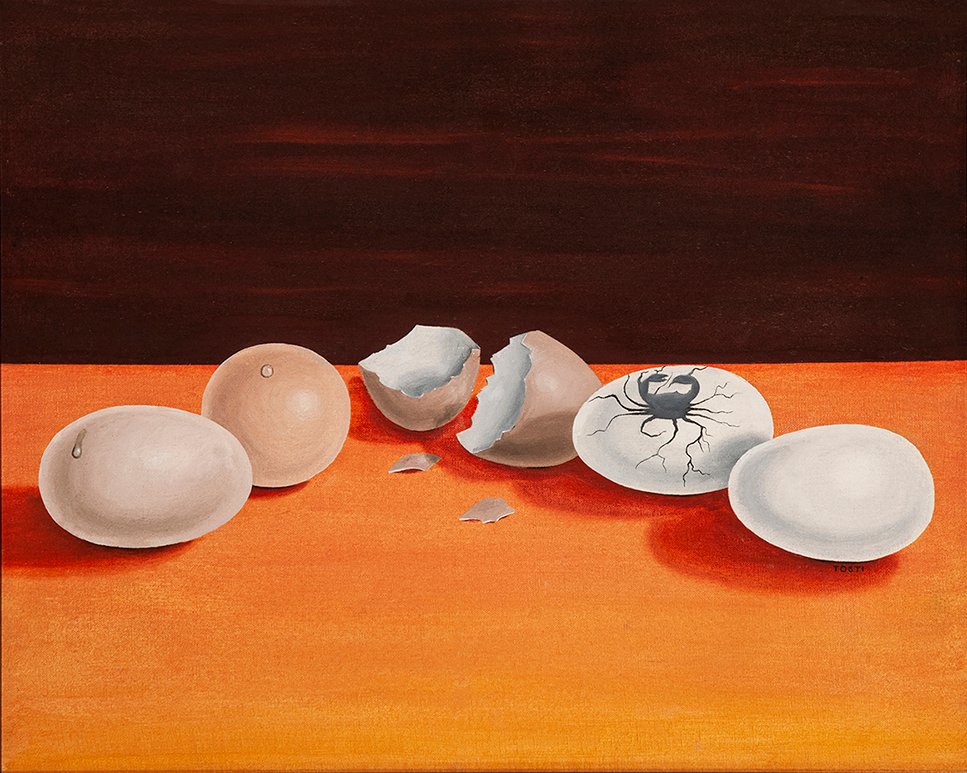
Five Eggs
Oil on canvas, Mallorca, Spain, 1971 (age 20)
Back at Princeton, Tosti created a range of exploratory and experimental works. In his series, Perceptuals, each work illustrated a specific aspect of human visual processing.
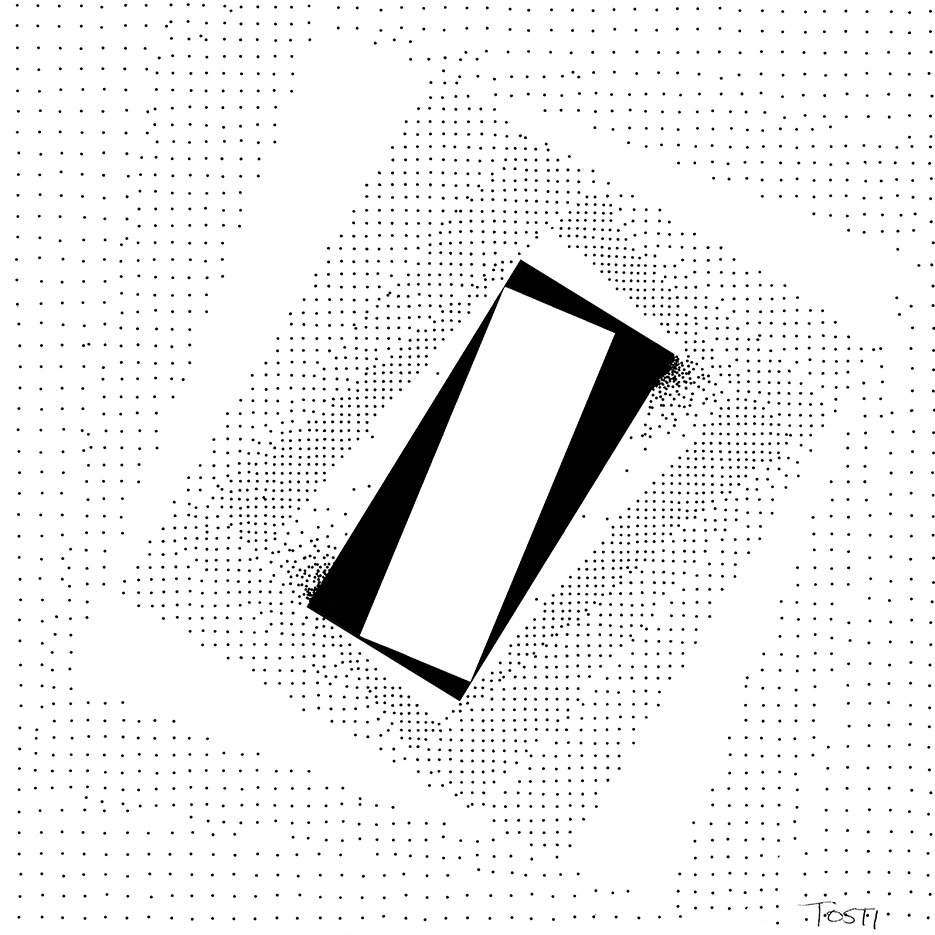
Similarity Grouping
Perception of discrete rectangles through dot spacing, Princeton, New Jersey, 1971 (age 20)
In 1971, Tosti declared psychology as a major and immediately focused on the psychology and perception of art. (Tosti’s 1973 undergraduate thesis, Sight and Cinema, was a comparison between the perception of art and the direct perception of the real world).
In 1972, he began his Creature Series.
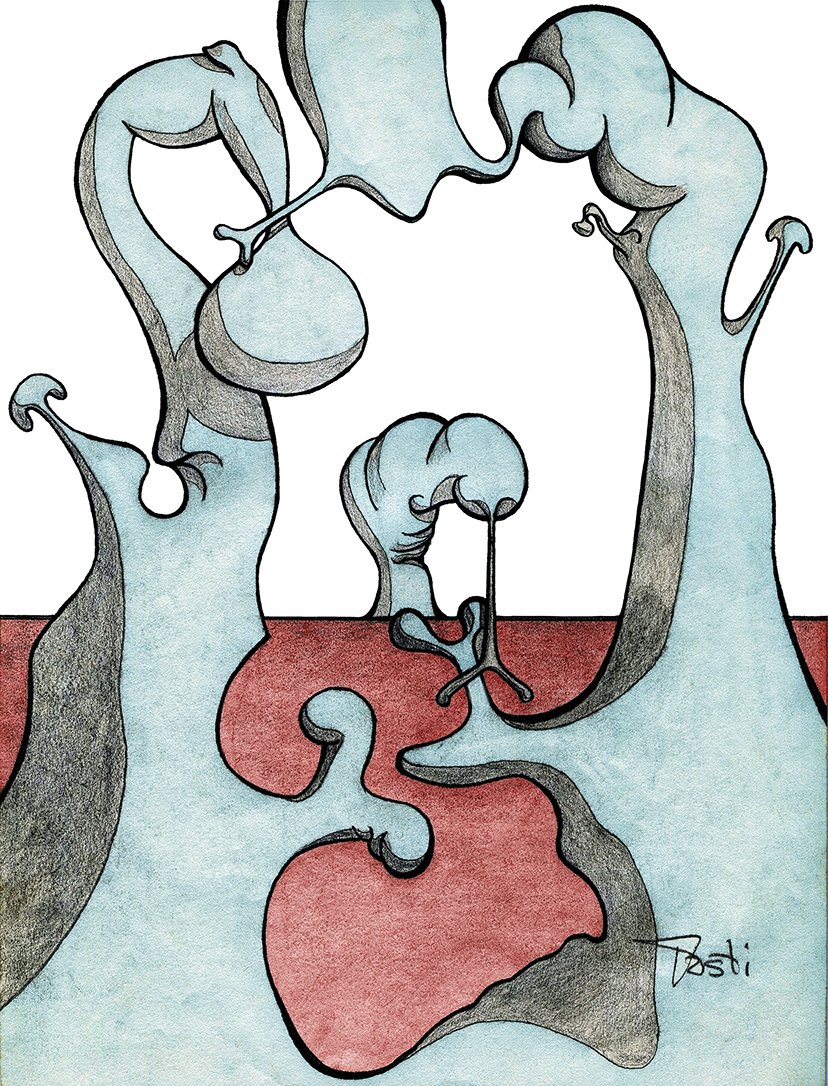
The Interloper (Red and Blue Version)
Colorized print of a pencil drawing, Falls Church, Virginia, 1974
Moving effortlessly among genres, Tosti won an open contest to create the cartoonish class of 1973 logo.
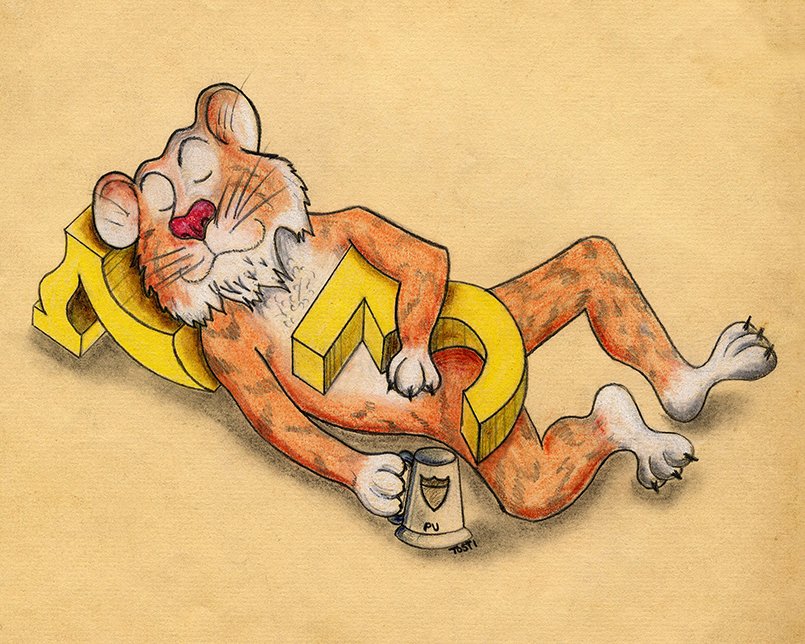
The 1973 Tiger
Pastel and pencil, Princeton, New Jersey, 1972
During this time, Tosti also produced a series of surrealist-tinged drawings of imaginary landscapes.
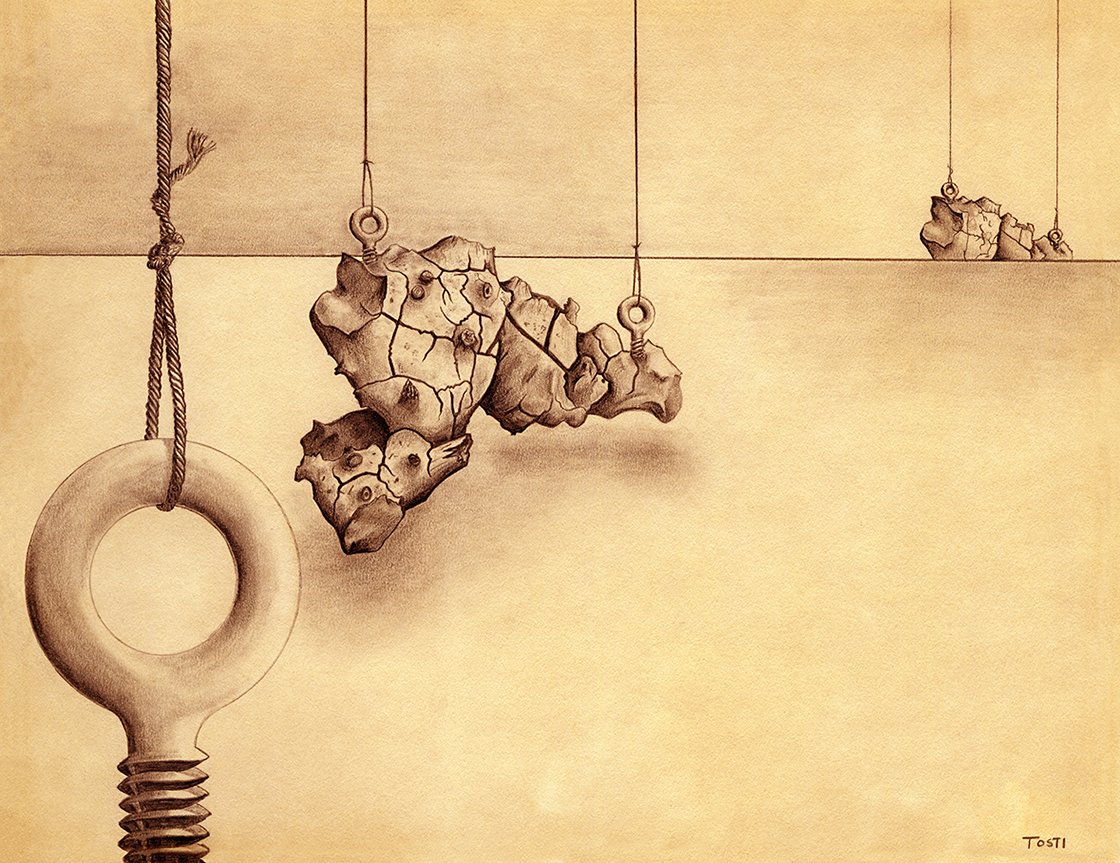
Fractured Cargo (Tinted Version)
Pencil on paper, Princeton, New Jersey 1973
In early 1973, Tosti turned his focus to photography and learning darkroom technique.
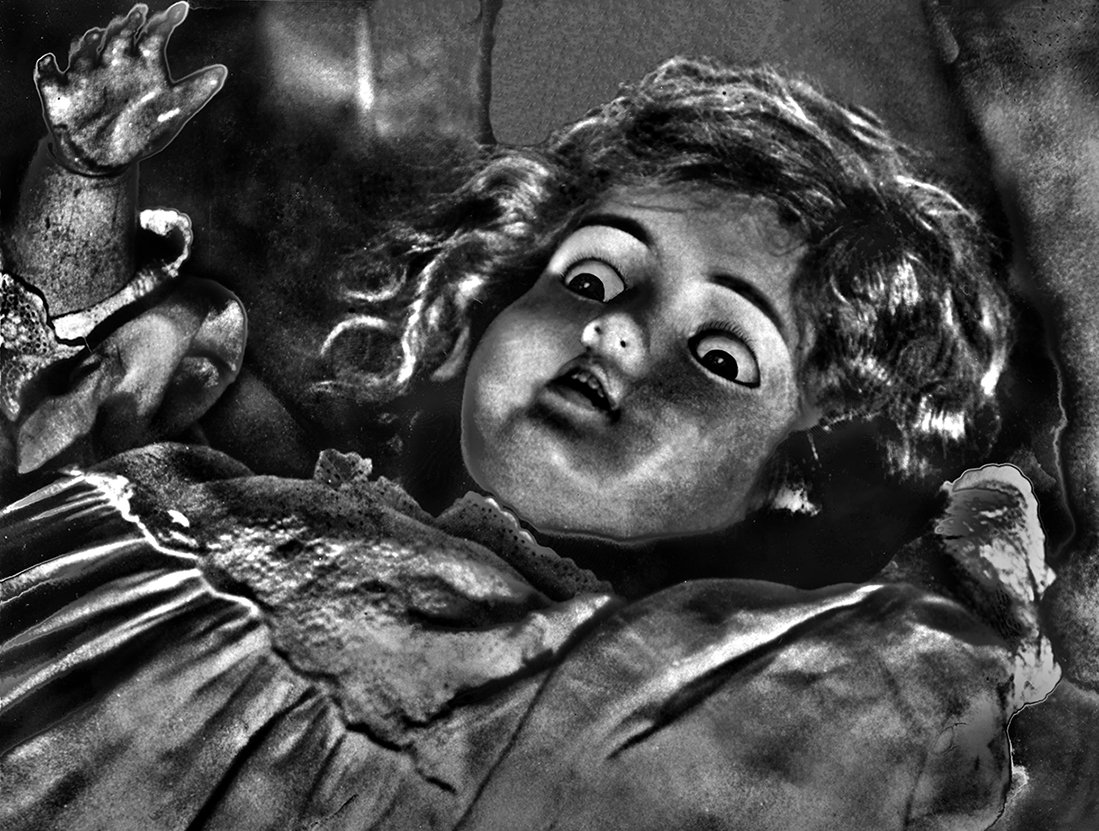
Frightened Doll #2
Black and white print from a pushed internegative, Princeton, New Jersey, 1973
By the time of his graduation from Princeton in 1973, Tosti had become a student of both art and film and procured a job as an assistant film editor to Bob Velasco, then Washington D.C.’s top music editor.
Meanwhile, Tosti continued drawing.
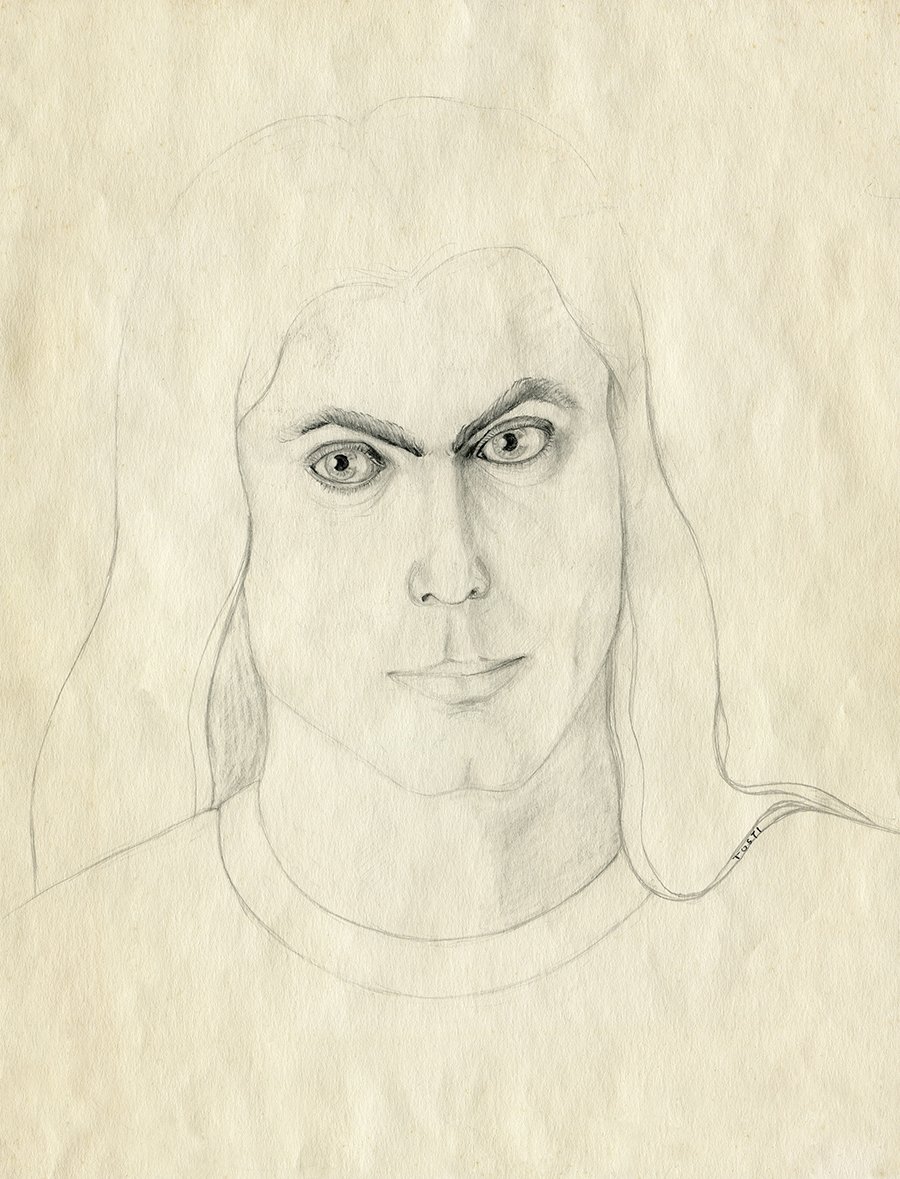
Young Man
Pencil on paper (self portrait), Falls Church, Virginia, 1973 (age 22)
In 1974 and 1975, Tosti took documentary footage of several cultural anthropology trips organized by professor Tom Larson.
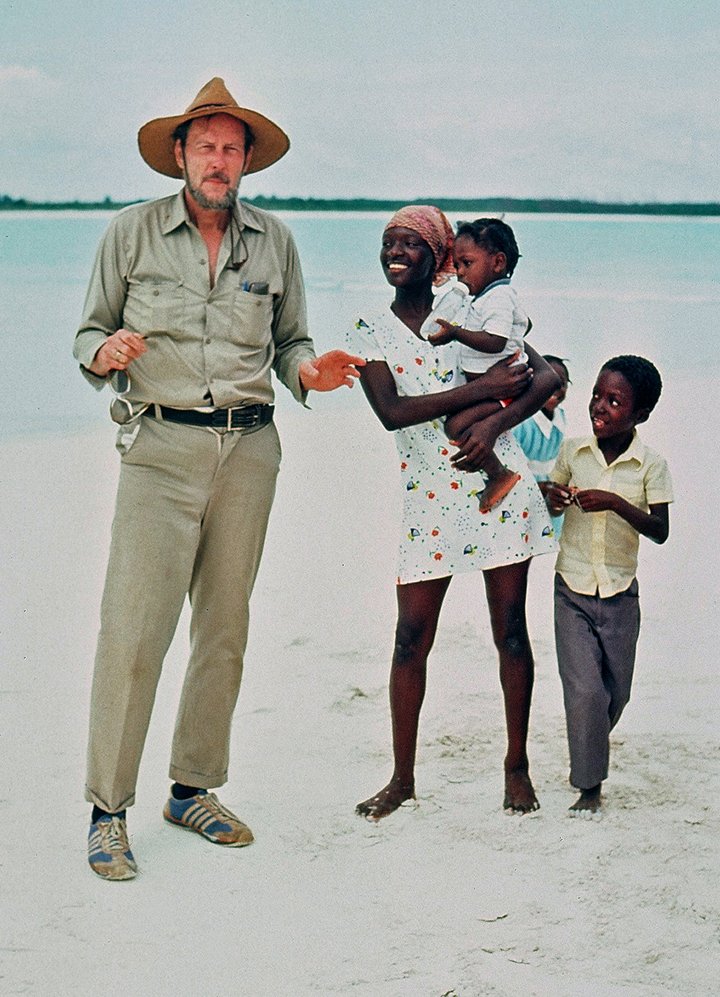
Professor Larson Entertains
Lamu, Kenya, 1975
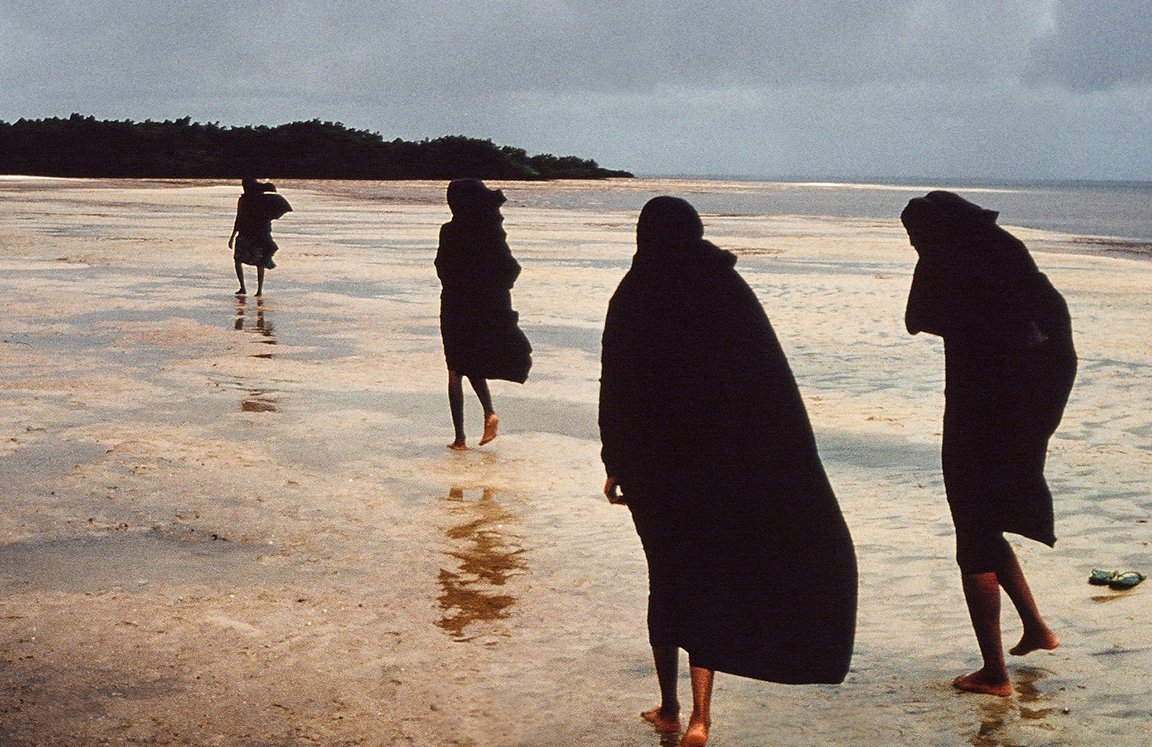
Women at the Beach
Lamu, Kenya, 1975
In 1975, Tosti committed to a three year effort to immerse himself in the Los Angeles filmmaking culture. He enrolled in a master’s program in filmmaking at Columbia College, where he took night courses and worked in the industry by day. His first job upon arrival, was as a colorist at the American Film Industries Laboratory. Subsequently, he formed the first version of his company, Tosti Productions. The company offered film editing, production photography, and location and studio sound recording. In the company, Tosti worked on a wide range and number of projects, such as features (e.g., “The Incredible Melting Man”), documentaries, training films, and numerous television commercials. While at Columbia, Tosti had several important influences including the noted filmmaker and film theoretician, Bruce Block, who served as Tosti’s thesis advisor. In his second year of film school, Tosti won the Academy of Motion Picture Arts and Sciences’ SMPTE Award (Society of Motion Picture and Television Engineers). In 1977, Tosti graduated at the top of his Masters class.
Shortly afterward, Tosti created Mementos of Venice Beach, a portrait of Venice, California in its heyday.
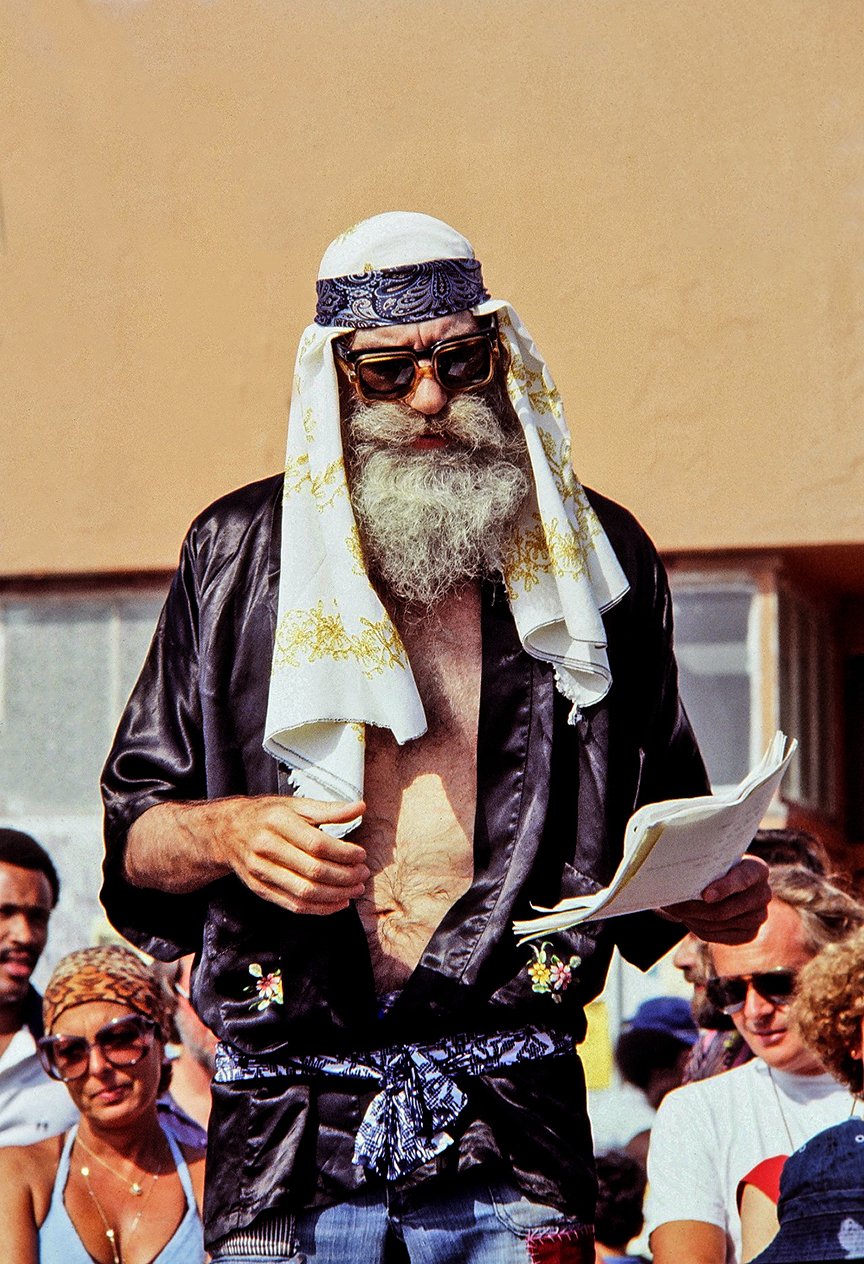
Swami X
Dispensing his daily beach-side wisdom, Venice, California, 1978
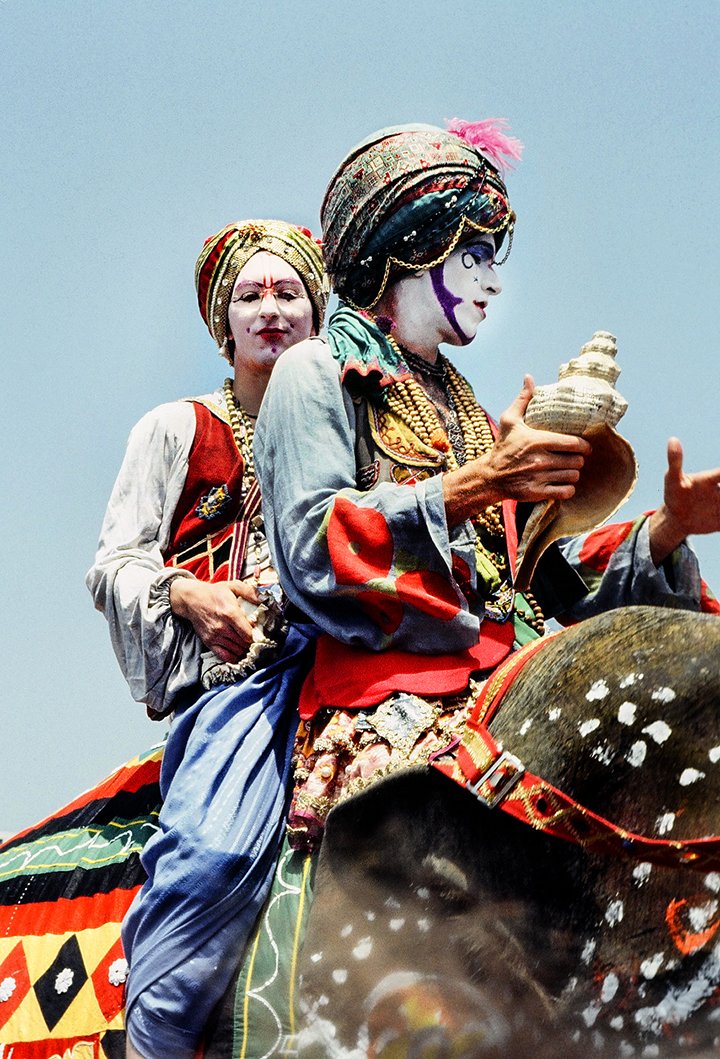
Riding the Elephant
Annual parade, Venice, California, 1978
By the summer of 1979, Tosti was back in Virginia with some financing and a finished script, and set about producing The Magic Pencil, a thirty-minute after-school children’s special.
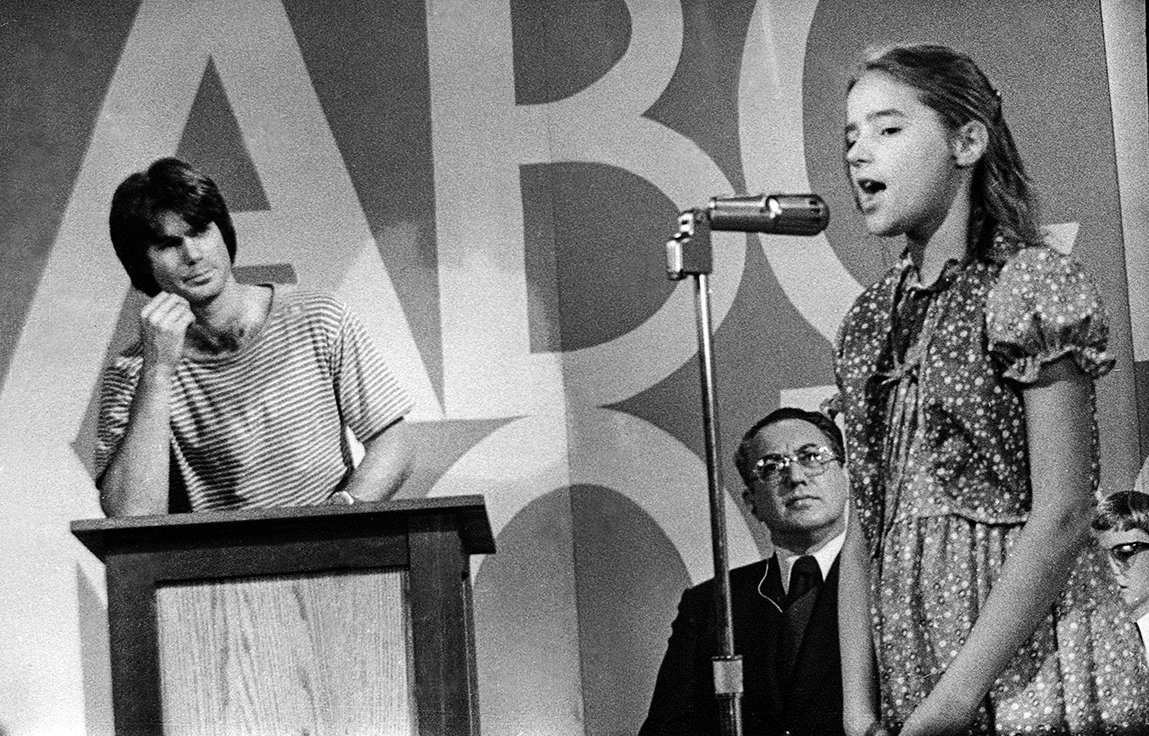
Rehearsal for The Magic Pencil
With Tosti at left, Falls Church, Virginia, 1979.
Tosti concluded the production phase of The Magic Pencil just one week before he entered law school at American University’s Washington College of Law. During his first year, he edited the movie, and premiered it at D.C.’s Biograph Theater. From the start of law school, Tosti concentrated on an art-law curriculum, taking all the relevant course offerings. When he ran out of courses to take, he turned to noted copyright professor Peter Jaszi and developed and took independent study courses in the art-law area, including a course on the law of motion picture production and one on the law of distribution of art and motion pictures. In his second year of law school, Tosti won first prize in the Nathan Burkam Memorial Competition, administered by ASCAP (The American Society of Composers, Authors, and Publishers) for an essay on the law of motion picture scripts. In 1982, Tosti graduated with a Juris Doctors (J.D.) degree, cum laude. He also won The Dean’s Award for Professional Responsibility; Outstanding Student in a Clinical Program. During his third year of law school, Tosti wrote a script for Design 2084 that would become a cultish, super-low budget sci-fi feature. After graduation in 1982, Tosti immediately went into production on Design 2084.
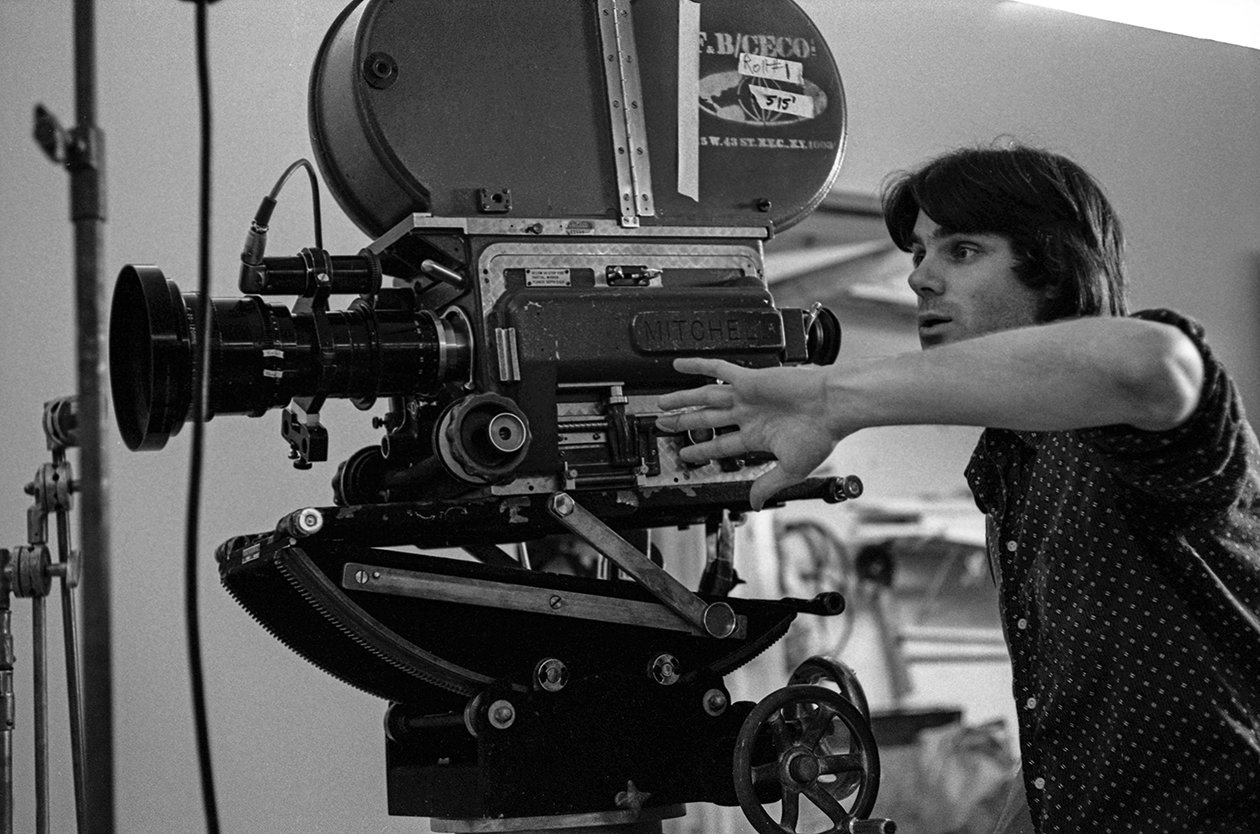
Tosti on the Set of Design 2084
Lorton, Virginia, 1984.
For about five years, beginning in 1985, Tosti served as a Professorial Lecturer of Law at the Washington College of Law of the American University, where he originated and taught the law school’s first Entertainment Law courses. Since the 1980’s, Tosti has been Contributing Author of various editions of two law dictionaries: Law Dictionary for Non-lawyers and Oran’s Dictionary of the Law. In 1993, Tosti joined the Fairfax, Virginia A-V rated law firm of Taylor, Newsome, and Tinkham. Tosti became an owner and officer (vice president and secretary) of what eventually became Taylor, Messick and Tosti. While at the firm, Tosti served as a director and officer of the nonprofit Fairfax Cable Access Corporation (FCAC), one of the nation’s largest. At FCAC Tosti worked to expand the training department’s offerings, himself teaching a variety of courses including: The Language of Pictures, Photographic Lighting, Video Law, and Advertising Psychology. At FCAC, Tosti also assisted in the production of historical documentaries (for which he was recognized with a Telly Award for his videography).
Throughout, Tosti has produced numerous and varied photographic works.
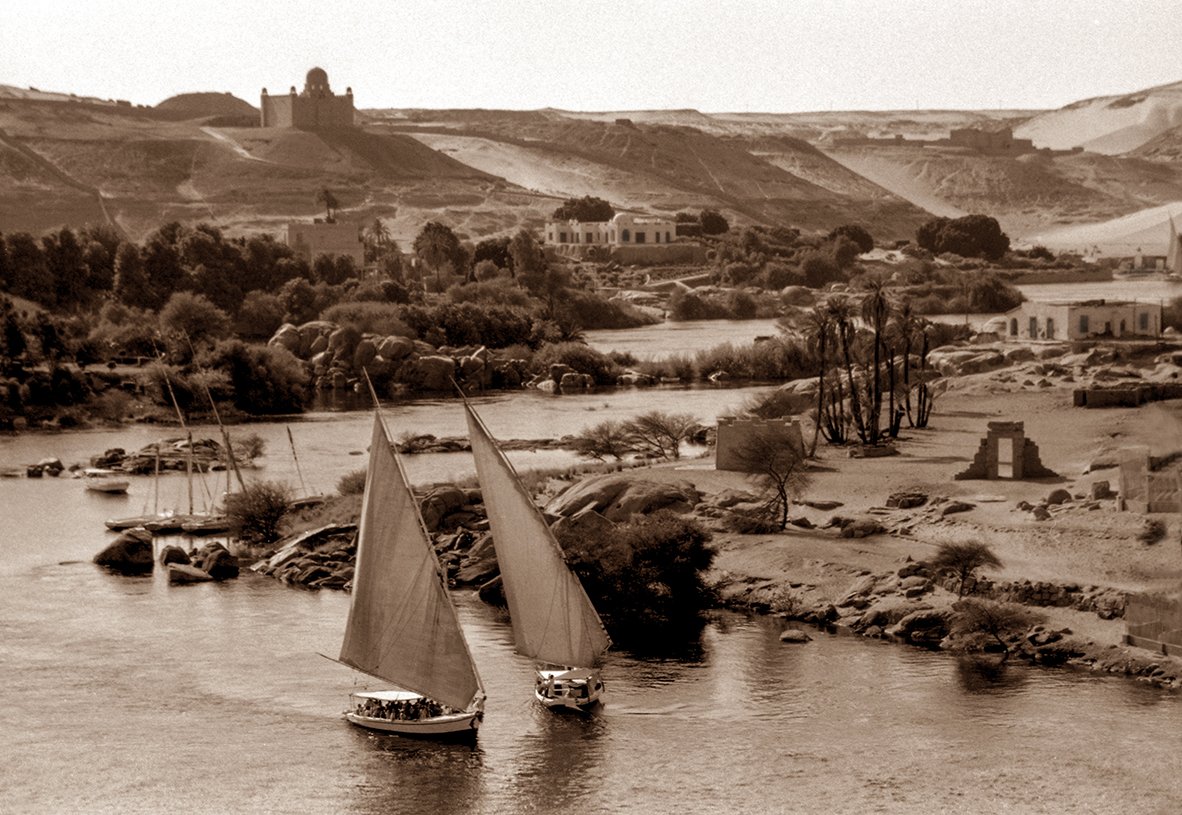
The Nile River at Aswan
Egypt, 1999 (#84-14)
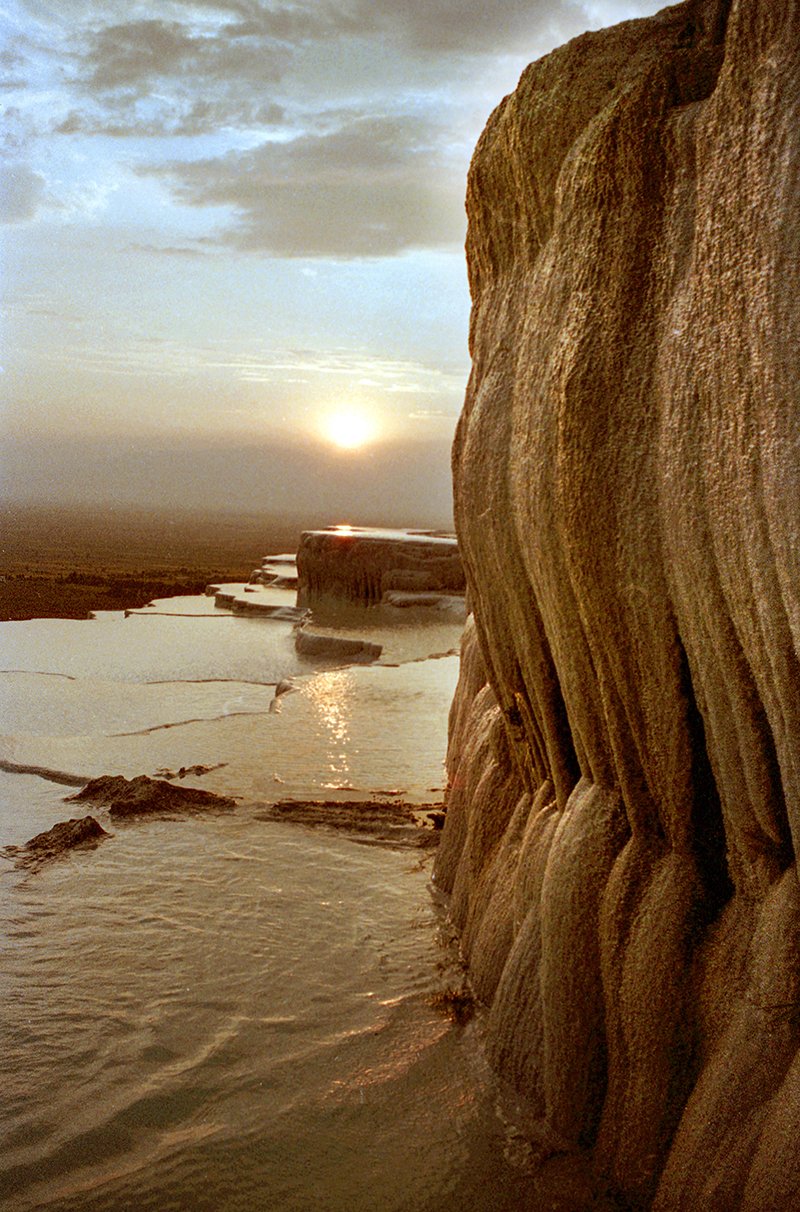
The Thermal Pools of Pamukkale
Denizli, Turkey, 1990 (#03-31)
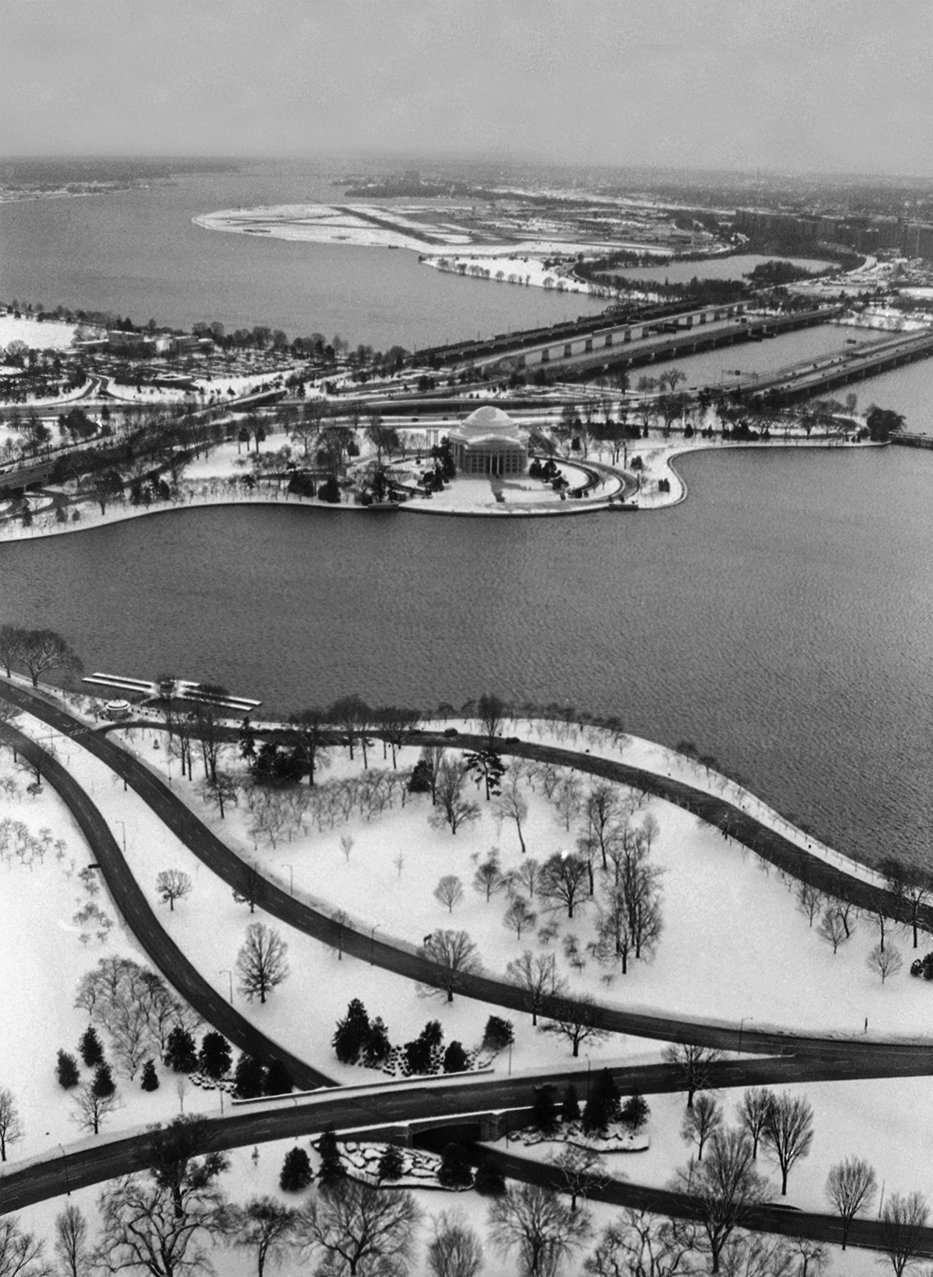
Washington Winterways
Winter scene from the Washington Monument, 1994 (#39-18)
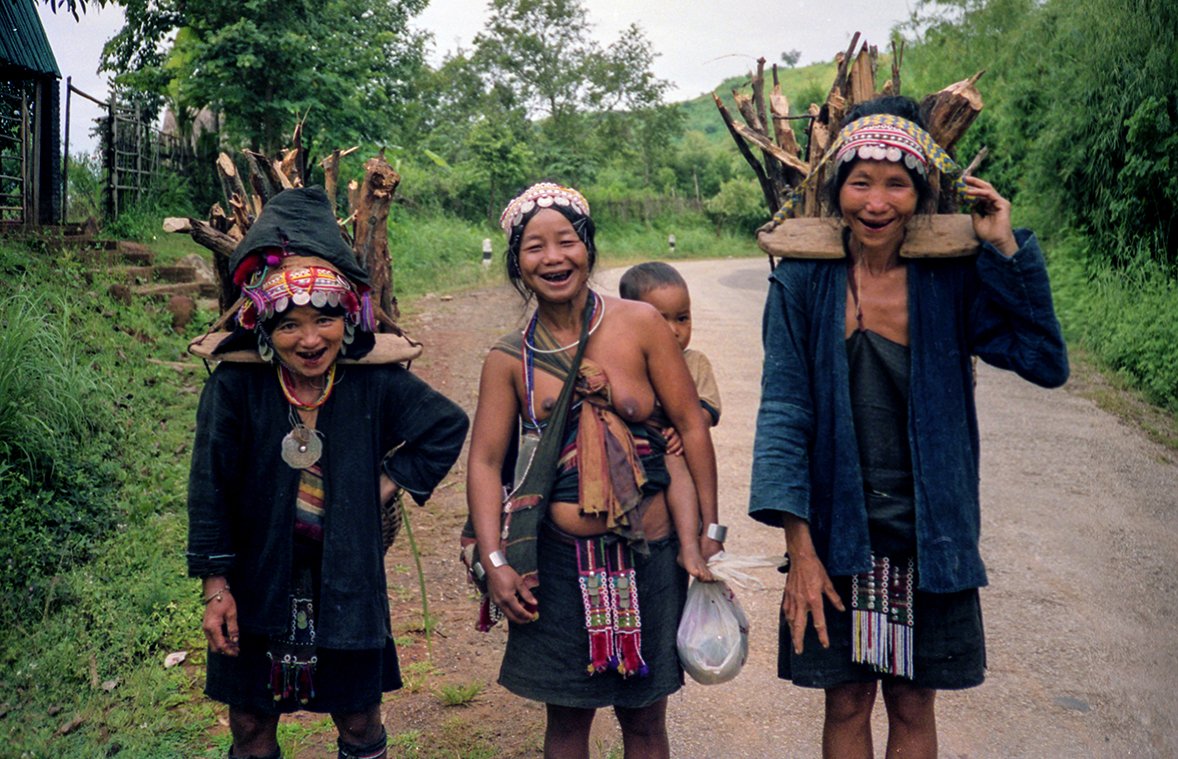
Three Akha Women
On a path near Mei Sai, Thailand, 1988
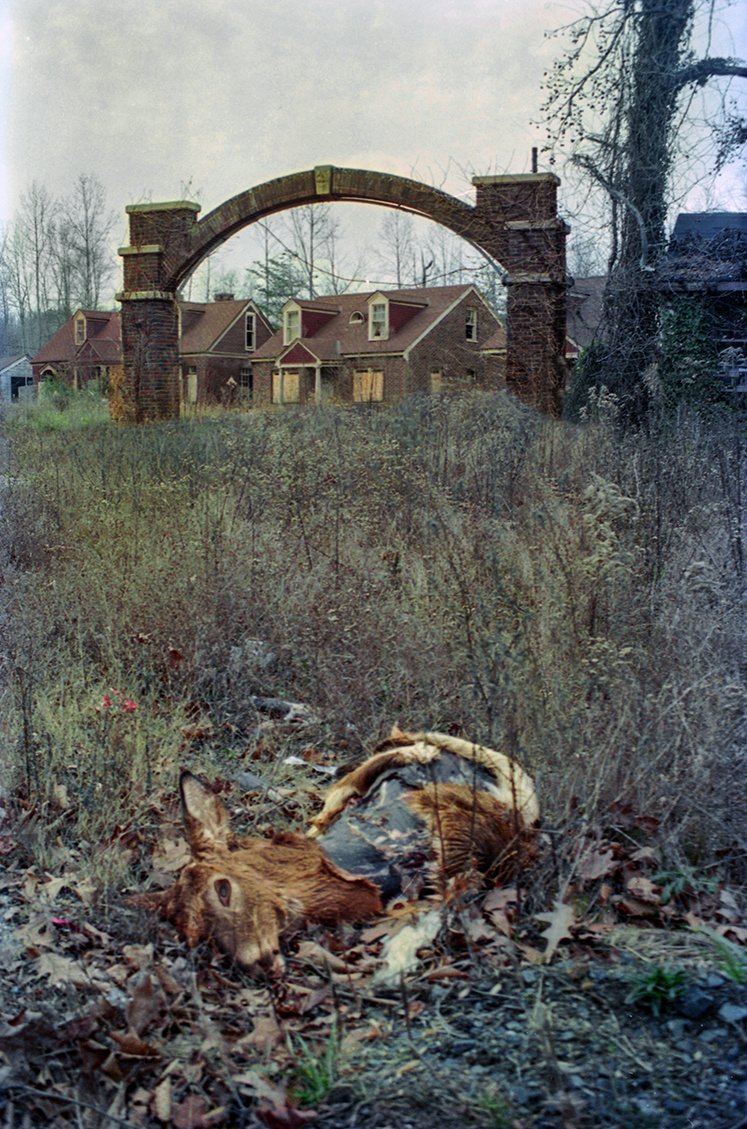
Decay
Deer carcass in front of a derelict motel near Fredericksburg, Virginia, 1994 (#38-22)
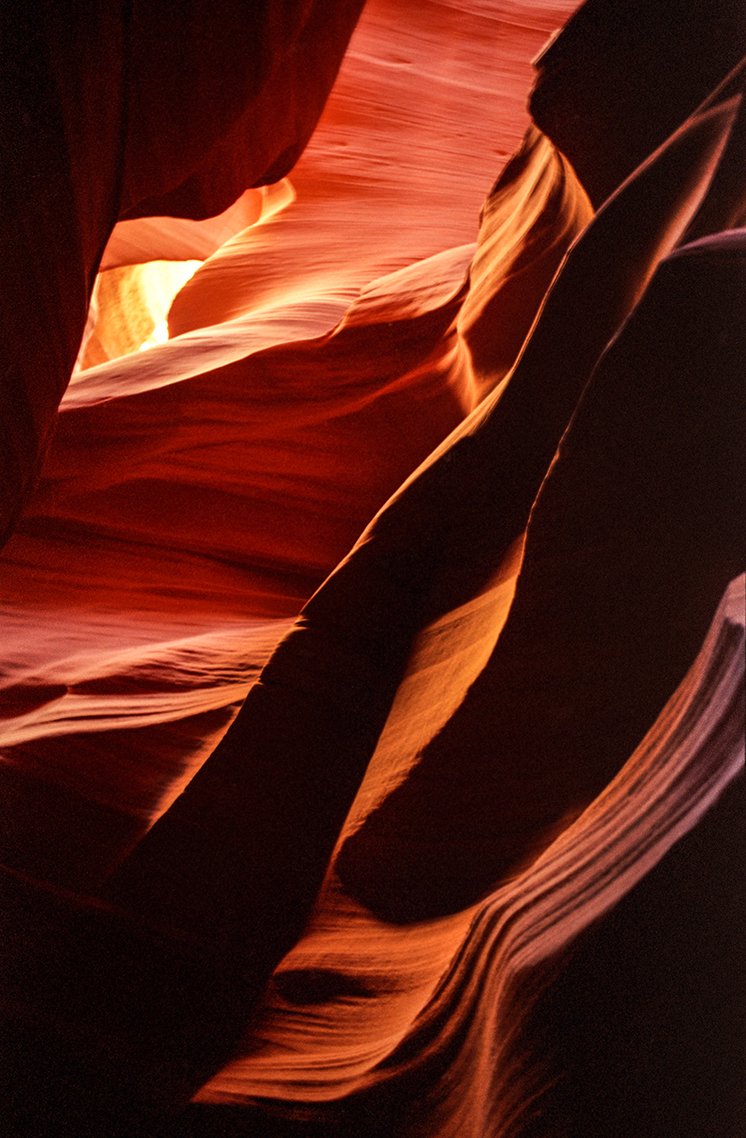
Abstract Flowstone
Antelope Canyon, Utah, 1999 (#90-14a)
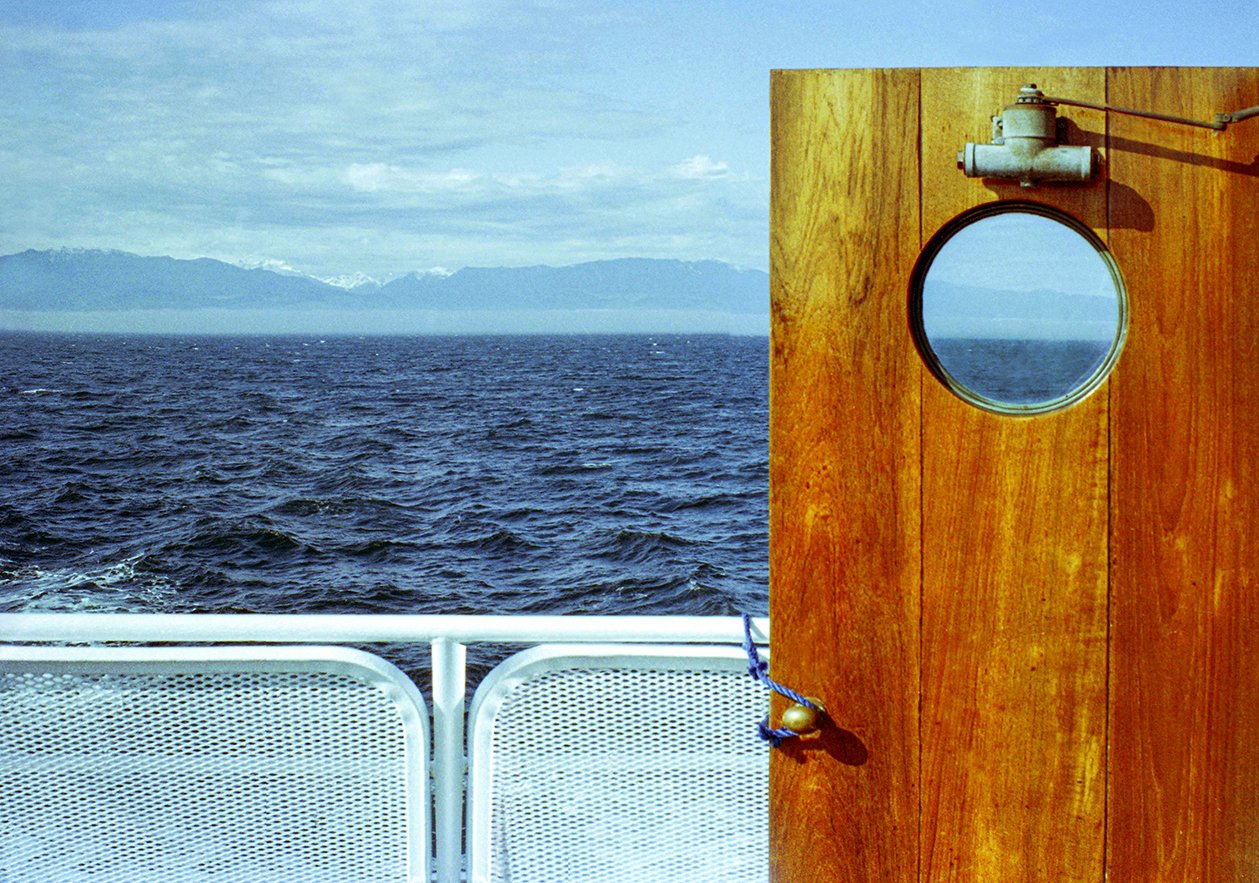
Porthole Door
On the Seattle ferry, 1997 (#58-36)
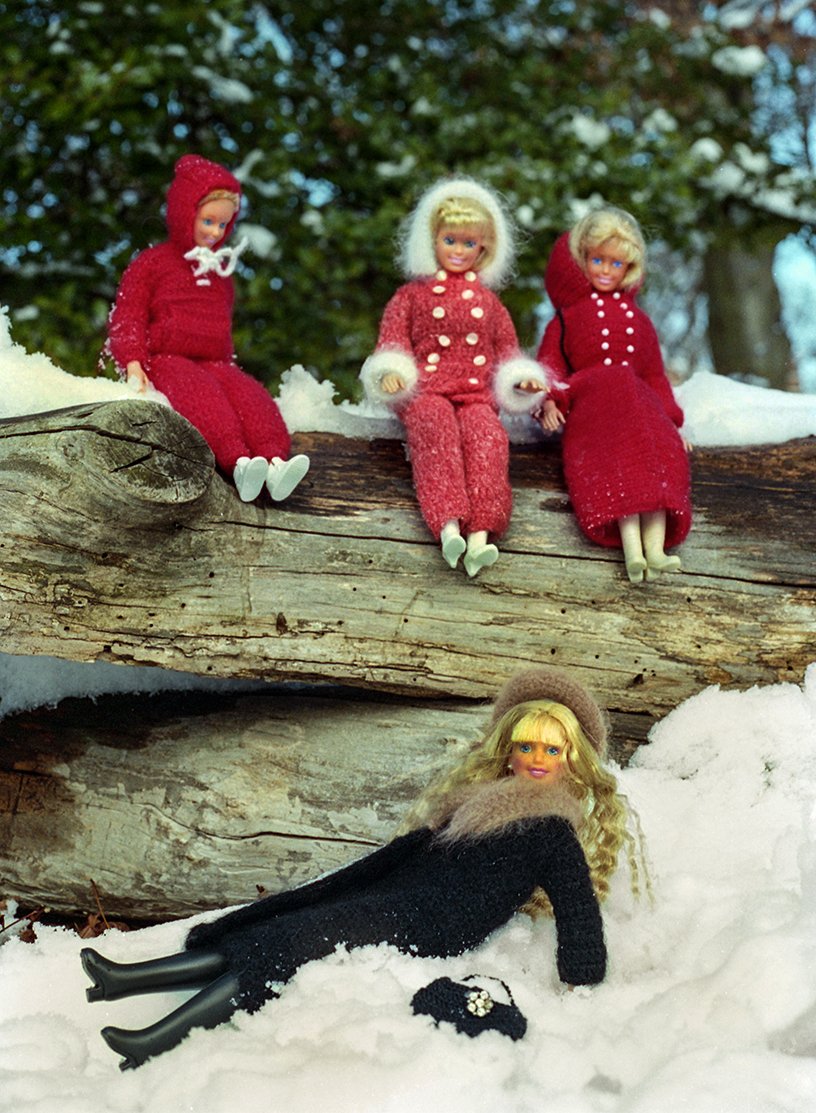
Snow birds
Four Maxi dolls with handmade costumes, Falls Church, Virginia, 1995 (#40-13)
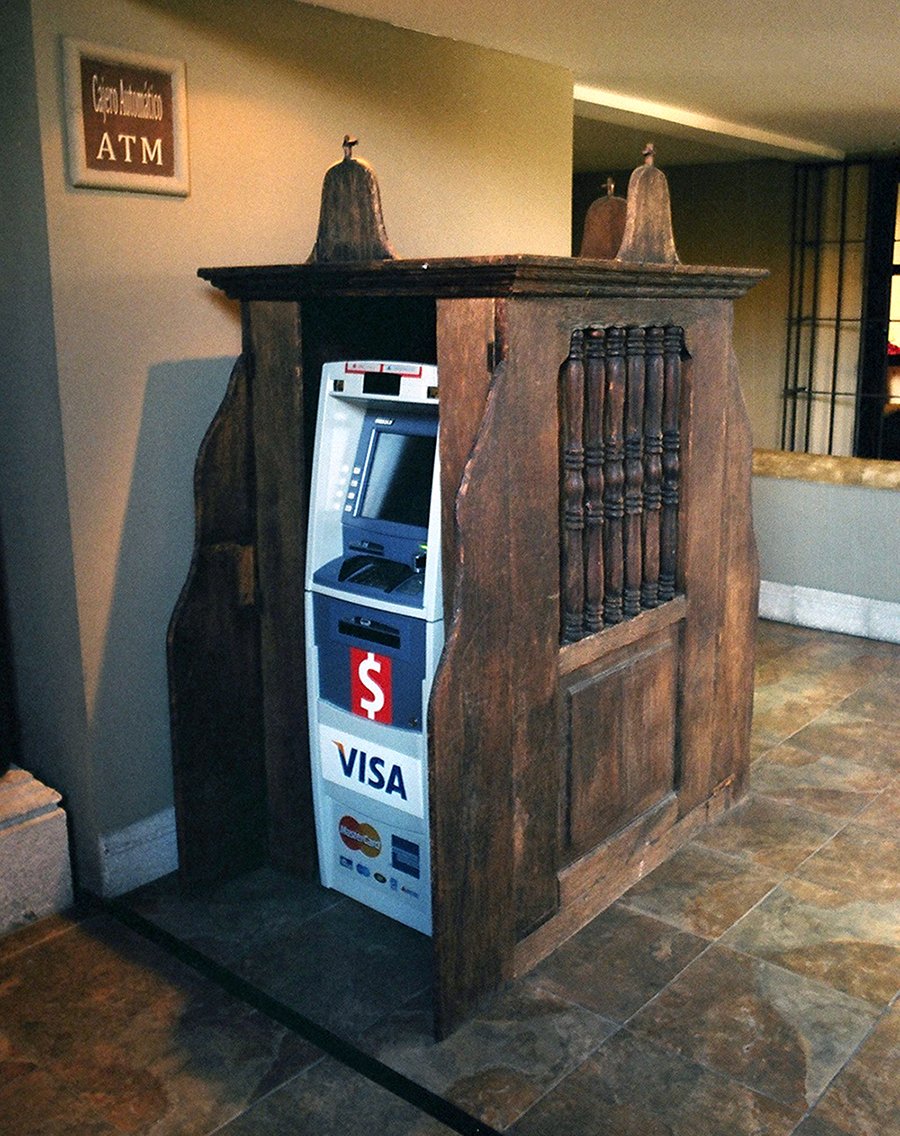
ATM Confessional
La Antigua, Guatemala, 2015 (#502-36a)
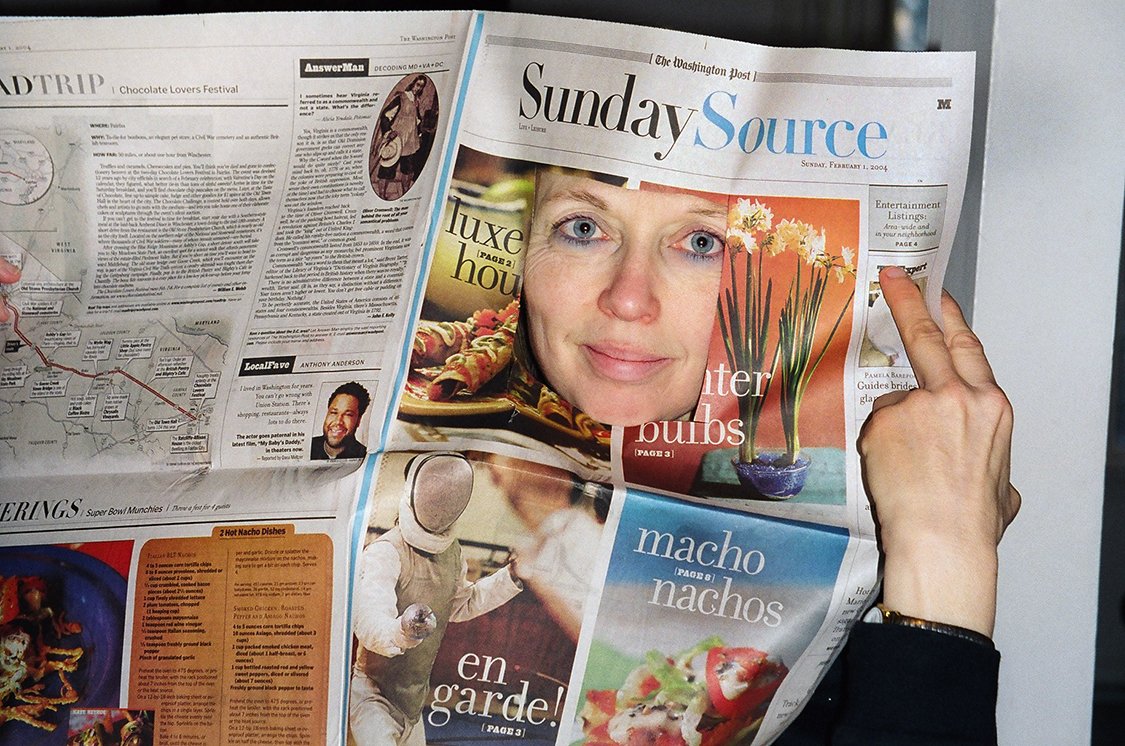
Seeing Through the News
Fairfax, Virginia, 2004 (#389-04)
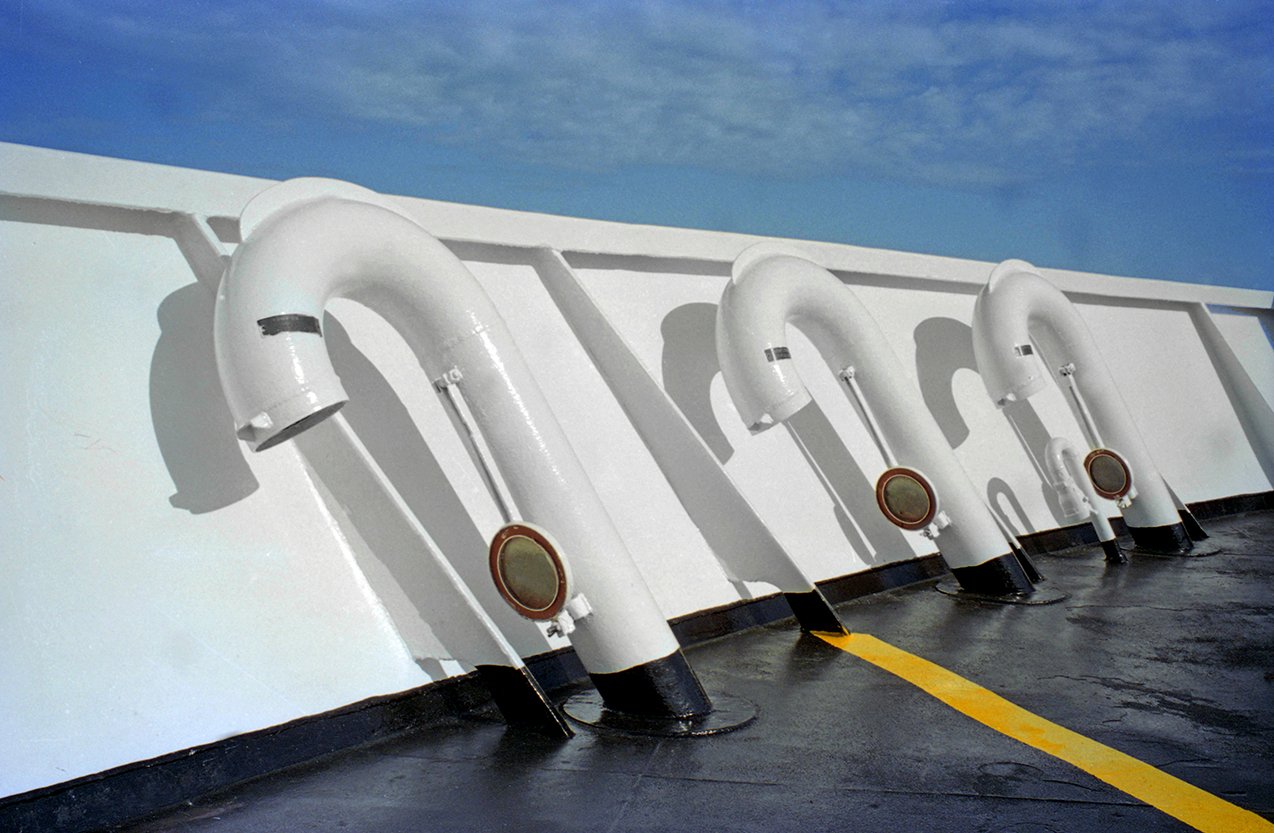
Canes and Angles
On the Seattle ferry, 1997 (#58-37)
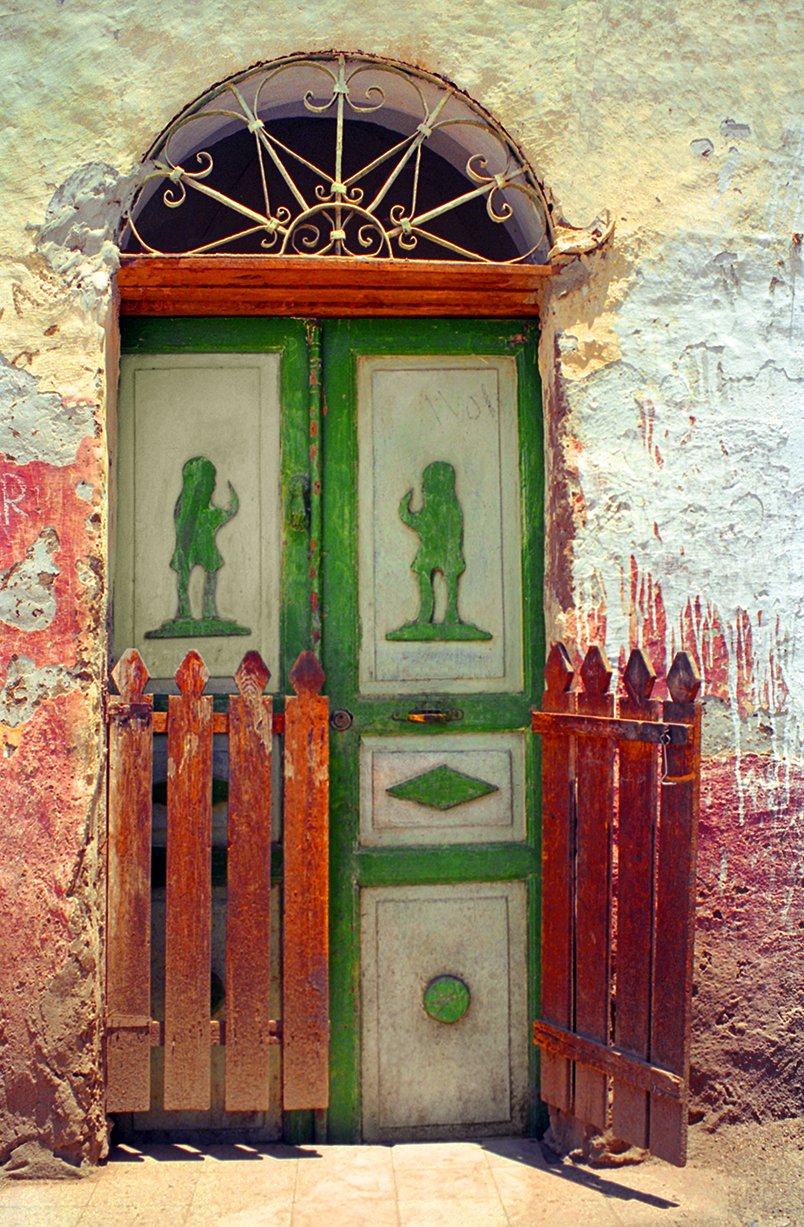
Nubian Door
Aswan, Egypt, 1999 (#85-08)
In 1999, Tosti began his work on the Circle Picture Project, a massive effort spanning the entire first quarter of the 21st Century.
Artist’s Statement Regarding the Circle Picture Project
Mark Tosti, artist-photographer
I took the big leap in 2000, putting into motion a narrative that has led directly to the present moment.
In 1999, I was secure within my legal world, and keeping my life-long art photography dreams alive through many individual activities, including creation and teaching. But, this was far from enough, I needed to make a total commitment to my work. This pushed me to pursue a thorough plan to thrive as an artist-photographer. The plan hinged on a massive multi-year endeavor: The Circle Picture Project.
What first drew me to this particular project was the desire to create work in a circular format, an area of art that seemed to offer me almost limitless possibilities. I intensively studied the form and analyzed almost every possible example, especially in regard to techniques particular to the circular form. It was only afterward that I started thinking about the logistics of capturing my visual ideas by photographic means.
So, throughout most of 1999, I worked double time on testing various cameras, lenses, and combinations of lenses, putting together shot lists, determining specific categories of shots, and formulating principles of composition for the circle, as well as for the ellipse. With the the various preparations and tests yielding proof of concept, I decided to retire completely from legal practice – which I did on December 31, 1999.
One day after my retirement from the law, on January 1, 2000, the first day of the 21st century, I got married to the only person that thought that abandoning a career for the uncertainty of an artist’s life was a smart idea. For various reasons, I was absolutely sure about the transformation – and I’ve never looked back. (The world travel necessary to execute the Circle Picture Project may have played a role in the decision.) I have now been working non-stop as a artist-photographer for the entire first quarter of the 21st century (coincidentally, the same span as that of contemporary art itself).
While I have been and am currently working on many other projects, notably the upcoming Photo-Based Design Project, I am now focused on the printing phase of the Circle Picture Project.
The Project is comprised of about 700 core images, all in highly limited editions (of 1 to 11, mostly from 3 to 7). All of my editions are true ones: no artist’s proofs, no size-based editions, and so on. (Closing the Project and defining the total universe of possible works contributes to stable values.) All of the project’s art photographs originated on film, with any effects created “in camera.” From the uncountable number of exposures, a brutal selection process was undertaken to create a set of unique Circle Pictures: not just different from the images of others, but also (mostly) different from the other images in the collection. (To add to the variety, prints within an edition are sometimes systematically varied, often by color or density.)
The aims of the Circle Picture Project were grand from the very start and have not changed. I wanted to create a large body of unique work that would consist of the highest quality circular photographs, and that would reflect the most profound use of ultra-wide lenses, including the so-called “fish-eye lens.” I wanted to compositionally control the powerful distortion of ultra-wide lenses; to expand on compositional principles pertaining to circular works in general, and to “implied-sphere” images (such as those derived from ultra-wide lenses); and even to develop and use the principles of composition within an elliptical format.
My aims were strongly supported by the state of play in 2000: there were few existing exemplars of what I sought to do.
The most comprehensive use of the circular format, and of circular pictorial organizations generally, was during the Renaissance, which provides many lessons for the use of the circular form. I studied Renaissance works at length, especially those on view in Florence. The best of the Renaissance’s circular paintings (tondos) reveal various organizational schemes, some rectilinear, some curvilinear. Most have brilliant two-dimensional compositional arrangements (such as Raphael’s “Madonna of the Chair”). Modernly, the circular format has been widely used in purely abstract and other non-representational work. (Much of this work involves concentric circles.)
It was true in 2000 (and it is still mostly true today) that, if you leave the Renaissance and abstract works aside, there were few significant art works in a circular format. A few examples illustrate this. The famous “Turkish Bath” is the great Ingres’ only circular painting, done late in life, and made through the cropping of a rectangle into a circle. The famous painting by Avercamp, “Winter Scene with Skaters,” is his principal circle picture, existing in a sea of his lesser, but similar, rectangular images. And, the great Monet’s late-life circular water lily paintings number only four among more than a hundred similar rectangular paintings. Most of the Masters did not even experiment with the circular format.
It is the same for the Masters of Photography: few undertook any work in the circular format. At the time I began the Circle Picture Project there was only a sprinkling of circular photographs: some from scientific applications, a few in Avant Guard magazine, one by Emmet Gowin, two by Pete Costas, and so on. In short, when I started, the available visual guidance was scarce.
Seeing this scarcity, I recognized that there existed many unexplored areas of circular art photography (as well as, many unexplored areas of the greater field of circle art). In other words, I saw real opportunity. The scarcity meant that nearly all of the material that I developed would be early and ground breaking. (Many of my other projects contain circle pictures that also attempt to broaden the “literature” of circle art generally.)
Circular photographs present a special case: not only are they subject to most compositional principles attendant to any other two-dimensional art work, but they must take into account the additional implied compositional lines that the circle, with its radial symmetry, requires, plus, taking into account the implied spherical compositional lines arising out of the barrel distortion inherent in the use of ultra-wide lenses.
That said, the “technical” is, of course, subsidiary to the “artistic,” however, the technical does provide a structure upon which meaning, feeling, interest, and ultimately artistry can be built. Nevertheless, technique is merely a means to an end.
The complex making of a circular photograph is reminiscent of the “decisive moment” in photography associated with Cartier-Bresson: in my case, though, I have to find the exact “decisive position” of the (proper) lens, which must be at specific coordinates in space, and then be pointed in the exact correct direction – and absolutely nothing else will do.
One cannot merely rely on the “wow effects” of an ultra-wide lens to carry an artistic image, you must deliver what any individual artistic image does. This includes, for example, the effective use of the formal elements of image, such as line, shape, and color. Consider the color dimension of the Circle Picture Project: as a whole it provides a survey of apt color combinations. (Also, inventive color combinations permeate the images in my Photo-Based Design Project.) An additional thing that an individual artistic image must deliver is emotion, concept, visual sensation, or a point of interest, that is, an image needs some sort of real substance. Most existing circular photographs are weak on both substance and formal image control. My images, in contrast, are formally controlled; you can find among the works in the Circle Picture Project those that express meaningful contrasts, that have irony, that have wit, and that have visual beauty.
Partly because the Circle Pictures have real substance, I can combine them in ways that no other circular photographs have previously been. This grouping takes various forms. For instance, the “Washington in the Round” series groups over sixty photographs to depict the U.S. Capital city in a new, complimentary, and unique photo essay. Grouping can also be on the basis of the format chosen. For instance, “The Ellipses,” a series with some fifty works, expresses the range of compositions possible within the two-foci realm of the elliptical form.
With ultra-wide lenses, distortion is a powerful ingredient that must be carefully controlled. Distortion makes shapes and lines plastic, that is, able to be “moulded” by the artist. Controlled distortion allows alignment of the subject’s image with edges and internal compositional lines. (I learned that distortions do not look “wrong” if they are properly integrated with the compositional scheme.) In this way, ultra-wide lenses have the power to “convert” photography into a true “plastic art.”
Distortion has uses beyond compositional concerns. Importantly, the distortion can be controlled to create feeling and emotion. Take the Circle Picture Project’s extensive series, “Sculpture Encircled,” where a three-dimensional work might be selectively distorted to accentuate its look and feel, or even to (irreverently) add the photographer’s vision to that of the sculptor.
One issue is the control of the degree or amount of overall image distortion. Distortion control begins with lens choice: you can choose, for example, a very wide lens that is distortion-free, or a combination of lenses with maximum distortion. My Circle Pictures exhibit various degrees of distortion, ranging from full distortion to no distortion at all. Another factor in distortion control is that distortion increases within the image as you move from its center to the periphery. Ultimately, to make use of distortion, you must integrate it into the compositional framework of the circular form.
In the 1960s, ultra-wide lenses became more available. Camera manufacturers, like Canon and Nikon, extolled the creativity possible with their ultra-wide lenses. And, they were absolutely right. Yet, until the Circle Picture Project, no one had really mastered ultra-wide lenses, nor discovered their full potential.